Aurora Leigh Book 1 Pdf
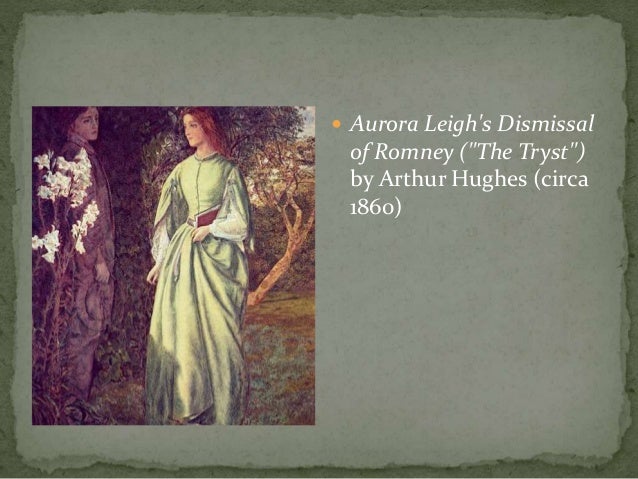
Aurora Leigh (Norton Critical Editions) by Elizabeth Barrett Browning Aurora Leigh (Norton Critical Editions) by Elizabeth Barrett Browning PDF, ePub eBook D0wnl0adThis Norton Critical Edition of Elizabeth Barrett Browning’s 1856 verse-novel is based on Margaret Reynolds’ variorum edition, which the British Academy awarded the 1993 Rose Mary Crawshay Prize and which is reprinted here by special arrangement with the Ohio University Press. The text is accompanied by both explanatory annotations and textual notes.' Backgrounds and Contexts' includes thirty letters or letter excerpts by Elizabeth Barrett Browning and Robert Browning that trace Aurora Leigh’s inception, evolution, and publication.Seven contemporary documents―on the 'woman question,' prostitution, socialism, and poetic theory―place the text historically.' Criticism' collects twenty-five assessments of Aurora Leigh from the period 1899–1993.A wide range of opinion is provided by George Eliot, Virginia Woolf, Ellen Moers, Sandra Gilbert and Susan Gubar, Angela Leighton, Deirdre David, Dorothy Mermin, and Margaret Reynolds, among others.A Chronology and Selected Bibliography are also included. From reader reviews: Julia Hanson:You can obtain this Aurora Leigh (Norton Critical Editions) by check out the bookstore or Mall. Simply viewing or reviewing it might to be your solve issue if you get difficulties for ones knowledge.
Kinds of this publication are various. Not only by means of written or printed but in addition can you enjoy this book through e-book. In the modern era like now, you just looking from your mobile phone and searching what your problem. Right now, choose your current ways to get more information about your guide. It is most important to arrange you to ultimately make your knowledge are still update.
Let's try to choose right ways for you. Marilyn McDermott:As a pupil exactly feel bored to reading.
If their teacher expected them to go to the library as well as to make summary for some book, they are complained. Just very little students that has reading's heart and soul or real their pastime. They just do what the educator want, like asked to go to the library. They go to at this time there but nothing reading seriously. Any students feel that reading through is not important, boring along with can't see colorful photographs on there.
Yeah, it is to become complicated. Book is very important for yourself. As we know that on this era, many ways to get whatever you want. Likewise word says, ways to reach Chinese's country. Therefore, this Aurora Leigh (Norton Critical Editions) can make you experience more interested to read.
Franklin Richter:Reading a publication make you to get more knowledge from it. You can take knowledge and information coming from a book. Book is written or printed or descriptive from each source this filled update of news. Within this modern era like at this point, many ways to get information are available for an individual.
From media social like newspaper, magazines, science reserve, encyclopedia, reference book, story and comic. You can add your understanding by that book.
Aurora Leigh Book 5 Summary
Ready to spend your spare time to spread out your book? Or just seeking the Aurora Leigh (Norton Critical Editions) when you needed it? Read Aurora Leigh (Norton Critical Editions) by Elizabeth Barrett Browning for online ebook. Leigh (Norton Critical Editions) by Elizabeth Barrett Browning Free PDF d0wnl0ad, audio books, books to read, good books to read, cheap books, good books, online books, books online, book reviews epub, read books online, books to read online, online library, greatbooks to read, PDF best books to read, top books to read Aurora Leigh (Norton Critical Editions) by Elizabeth Barrett Browning books to read online. Aurora Leigh (Norton Critical Editions) by Elizabeth Barrett Browning Doc Aurora Leigh (Norton Critical Editions) by Elizabeth Barrett Browning Mobipocket Aurora Leigh (Norton Critical Editions) by Elizabeth Barrett Browning EPub.
Aurora Leigh by Elizabeth Barrett Browning SummaryAurora Leigh is the foremost example of the mid-nineteenth-century poem of contemporary life. This verse-novel is a richly detailed representation of the early Victorian age. The social panorama extends from the slums of London, through the literary world, to the upper classes and a number of superb satiric portraits: an aunt with rigidly conventional notions of female education; Romney Leigh, the Christian socialist; Lord Howe, the amateur radical; Sir Blaise Delorme, the ostentatious Roman Catholic; and the unscrupulous society beauty Lady Waldemar. However, the dominant presence in the work is the narrator, Aurora Leigh herself. From early years in Italy and adolescence in the West Country to the vocational choices, creative struggles, and emotional entanglements of her first decade of adult life, Aurora Leigh develops her ideas on art, love, God, the Woman Question, and society. This is the first critically edited and fully annotated edition for almost a century.
ABOUT THE SERIES: For over 100 years Oxford World's Classics has made available the widest range of literature from around the globe. Each affordable volume reflects Oxford's commitment to scholarship, providing the most accurate text plus a wealth of other valuable features, including expert introductions by leading authorities, helpful notes to clarify the text, up-to-date bibliographies for further study, and much more. Aurora Leigh by Elizabeth Barrett Browning SummaryAurora Leigh is the foremost example of the mid-nineteenth-century poem of contemporary life. This verse-novel is a richly detailed representation of the early Victorian age. The social panorama extends from the slums of London, through the literary world, to the upper classes and a number of superb satiric portraits: an aunt with rigidly conventional notions of female education; Romney Leigh, the Christian socialist; Lord Howe, the amateur radical; Sir Blaise Delorme, the ostentatious Roman Catholic; and the unscrupulous society beauty Lady Waldemar.

However, the dominant presence in the work is the narrator, Aurora Leigh herself. From early years in Italy and adolescence in the West Country to the vocational choices, creative struggles, and emotional entanglements of her first decade of adult life, Aurora Leigh develops her ideas on art, love, God, the Woman Question, and society. This is the first critically edited and fully annotated edition for almost a century. ABOUT THE SERIES: For over 100 years Oxford World's Classics has made available the widest range of literature from around the globe.
Each affordable volume reflects Oxford's commitment to scholarship, providing the most accurate text plus a wealth of other valuable features, including expert introductions by leading authorities, helpful notes to clarify the text, up-to-date bibliographies for further study, and much more. Feminism in Elizabeth Barrett Browning’s 'Aurora Leigh': Developing a Concept of the Female Artist by Katharina E.
Thomas SummarySeminar paper from the year 2008 in the subject English - Literature, Works, grade: 1,0 (A), The University of North Carolina at Chapel Hill, course: Victorian Literature, language: English, abstract: Elizabeth Barrett Browning’s epic poem Aurora Leigh presents a viable feminist ideal. Its heroine, Aurora Leigh, ultimately resolves the dilemma of having to deny love for the sake of her work or vice versa by developing a new concept of the female artist. Although Aurora Leigh offers material for a much broader analysis of feminism, this paper will focus on the main character and narrator, Aurora Leigh herself. Although characters such as Marian Erle and Lady Waldemar also present interesting figures for further study, extending the analysis to them would be beyond the scope of this paper.
As this paper concentrates on the feminist ideal in relation to a woman’s vocation as an artist, Aurora Leigh best exemplifies this dynamic. Beginning by addressing Aurora’s education and early career in order to demonstrate her progression from a traditional concept of love and work, this paper will follow her development as she rejects conventional opposition to arrive at a fuller understanding of life as a female artist.
Possible alternative readings, such as the argument that Aurora ultimately sacrifices her artistic strivings for a conventional marriage, will also be discussed in order to support the thesis. Education in Nineteenth-Century British Literature by Sheila Cordner SummarySheila Cordner traces a tradition of literary resistance to dominant pedagogies in nineteenth-century Britain, recovering an overlooked chapter in the history of thought about education. This book considers an influential group of writers - all excluded from Oxford and Cambridge because of their class or gender - who argue extensively for the value of learning outside of schools altogether. From just beyond the walls of elite universities, Jane Austen, Elizabeth Barrett Browning, Thomas Hardy, and George Gissing used their position as outsiders as well as their intimate knowledge of British universities through brothers, fathers, and friends, to satirize rote learning in schools for the working classes as well as the education offered by elite colleges. Cordner analyzes how predominant educational rhetoric, intended to celebrate England's progress while simultaneously controlling the spread of knowledge to the masses, gets recast not only by the four primary authors in this book but also by insiders of universities, who fault schools for their emphasis on memorization.
Drawing upon working-men's club reports, student guides, educational pamphlets, and materials from the National Home Reading Union, as well as recent work on nineteenth-century theories of reading, Cordner unveils a broader cultural movement that embraced the freedom of learning on one's own. Aurora Leigh by Elizabeth Browning SummaryA novel in blank verse by Elizabeth Barrett Browning, published in 1857.
The first-person narrative, which comprises some 11,000 lines, tells of the heroine's childhood and youth in Italy and England, her self-education in her father's hidden library, and her successful pursuit of a literary career. Initially resisting a marriage proposal by the philanthropist Romney Leigh, Aurora later surrenders her independence and weds her faithful suitor, whose own idealism has also since been tempered by experience. Aurora's career, Romney's social theories, and a melodramatic subplot concerning forced prostitution elicit the author's vivid observations on the importance of poetry, the individual's responsibility to society, and the victimization of women. Elizabeth Barrett Browning by Rebecca Stott,Simon Avery SummaryThis volume will provide students with an introduction to the poetry and life of Elizabeth Barrett Browning, one of the most popular poets of her day in Britain and America and who has become one of the great icons of Victorianism for the modern age. The authors present a biographical survey, study of her poetry, its critical reception and an assessment of her influence on later poets.
This book also examines the complex 'myths' which are associated with Elizabeth Barrett Browning and offers re-readings of her life and work, particularly in dispelling the myth of the ailing invalid poet-recluse and instead showing her to be one of the great intellectuals of her day, immersed in European history and politics from a very early age. The book situates Browning within broader historical,political and cultural contexts than have yet been examined enabling a better understanding of her poetry and paints the portrait of a fine and innovative poet, an intellectual and an astute political thinker. Aurora Leigh and Other Poems by Elizabeth Browning SummaryAurora Leigh (1856), Elizabeth Barrett Browning's epic novel in blank verse, tells the story of the making of a woman poet, exploring 'the woman question', art and its relation to politics and social oppression. The texts in this selection are based in the main on the earliest printed versions of the poems.
What Edgar Allan Poe called 'her wild and magnificent genius' is abundantly in evidence. In addition to Aurora Leigh, this volume contains poetry from the several volumes of Elizabeth Barrett Browning's published poetry from 1826 to 1862, including Casa Guidi Windows (1851), Songs for the Ragged Schools of London (1854) and the British Library manuscript text of the 'Sonnets from the Portuguese' (1846) which records her courtship with Robert Browning. Sonnets from the Portuguese by Elizabeth Barrett Browning SummarySonnets from the Portuguese is the collection of love poems written by Elizabeth Barrett Browning in the time leading up to her marriage to Robert Browning. Elizabeth hesitated in publishing the poems, as they were so personally revealing, but her husband persuaded her of their high worth. She decided to pass them off as translations, in order to obscure her authorship, and so the title of the collection came about.
They were, and remain, immensely popular. Elizabeth Barrett and Robert Browning by Mary Sanders Pollock SummaryFirst published in 2003, this book examines the creative partnership of Elizabeth Barrett and Robert Browning, and provides a critical analysis of the poems written by this famous couple during the 16 year period of their friendship, courtship and marriage. Even quite early in their relationship, the Brownings shared a frame of reference: similar themes, narrative structures, and details of phrasing resonate in their works and suggest dialogue, rather than merely mutual influence. Pollock traces parallels between the Brownings' lives and works even before they met, and then throughout their courtship and married life, suggesting that their creative dialogue continued after Barrett Browning died in 1861, as her presence and themes continued to inform Browning's poetry for at least a decade afterward.